
How to choose
Sling bags: when one shoulder beats two
The swing-round is the feature
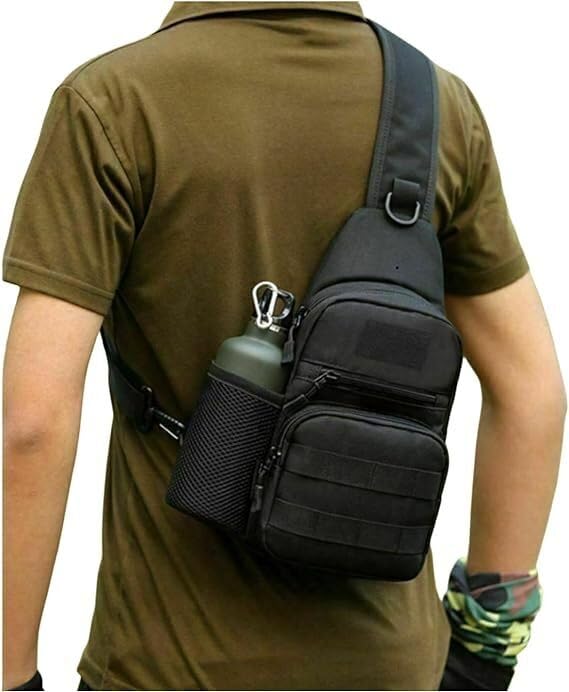
A sling sits diagonally across your back on a single strap. Pull it forward and it rotates to your chest, open and reachable, still attached to you. For a camera, a transit card or a wallet that comes out repeatedly, that is faster and safer than unshouldering a backpack. For a bag you open twice a day, it is no advantage at all.
Know the weight ceiling
All the load sits on one shoulder, so slings stop being comfortable somewhere around three or four kilos. That is fine for everyday carry and wrong for a day on the hill. If you are regularly packing a laptop plus a lunch plus a jacket, you want the 20 to 30 litre packs in the military range instead.
USB pass-through, and what it is not
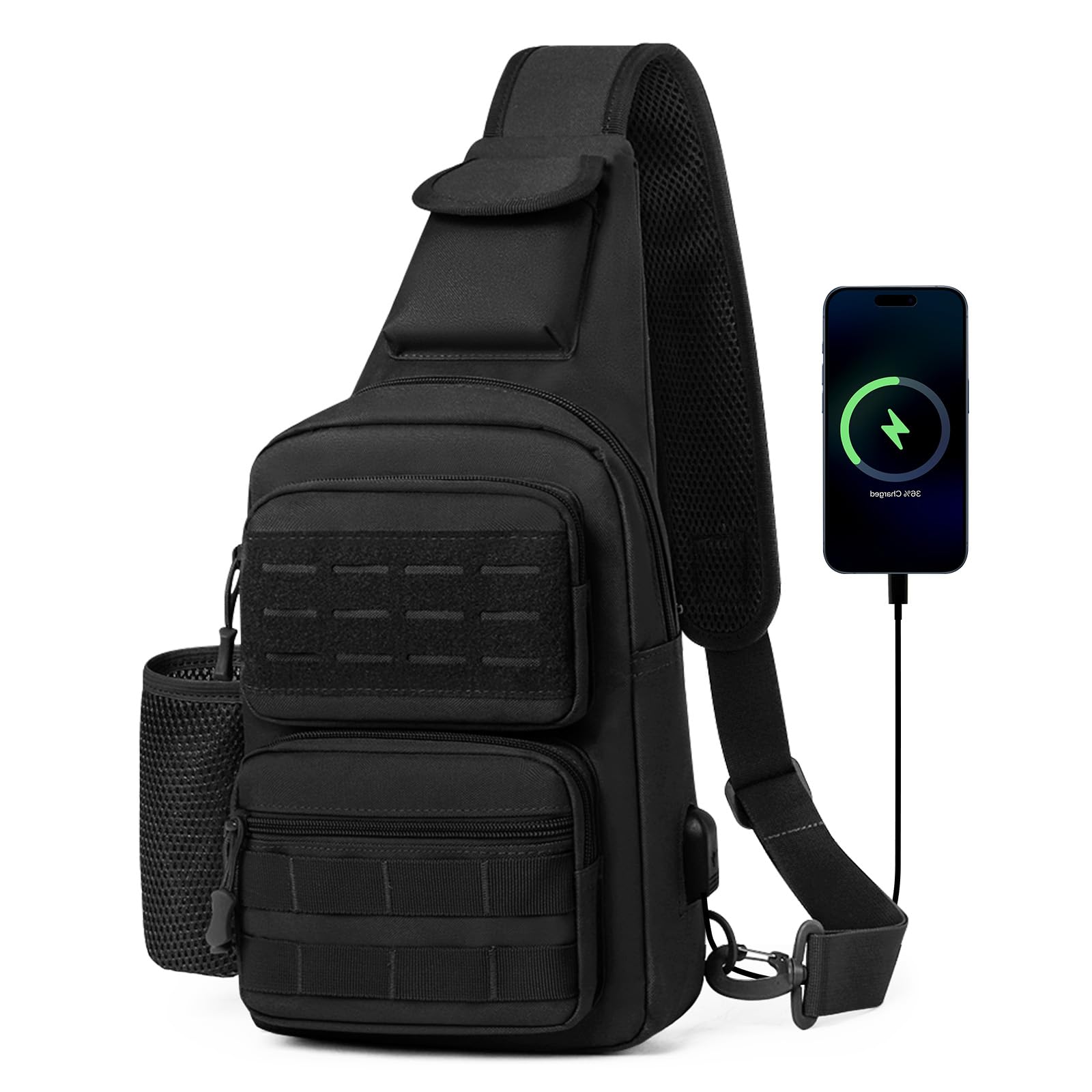
One of these has an external USB port. It is a pass-through — a short cable running from an internal pocket to the outside, so you can charge a phone from your own power bank without opening the bag. There is no battery included and none built in. It saves you threading a cable through a zip, nothing more.
Left or right shoulder
Most tactical slings have a reversible or adjustable strap so they can be worn on either side. It is worth checking before you buy if you have a strong preference, because a fixed-side sling worn on the wrong shoulder puts the opening in an awkward place and undoes the quick-access advantage.